

Easy Rosemary Focaccia Bread (No-Knead Overnight Recipe)
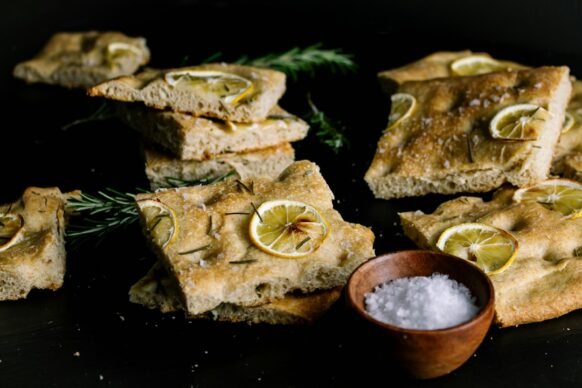
Rosemary focaccia bread is an Italian-style flatbread with a soft, airy center and a golden olive-oil crust. This no-knead version uses an overnight refrigerator rise to develop flavor while keeping hands-on work simple. Plan ahead: the dough needs 12–18 hours in the refrigerator.
Recipe at a glance
Hands-on prep: 15 minutes | Cold rise: 12–18 hours | Final rise: 2–3 hours | Bake: 22–28 minutes | Yield: One 9-by-13-inch pan, about 12 pieces.
Ingredients
- 4 cups (500 g) all-purpose flour
- 2 teaspoons (7 g) instant yeast
- 2 teaspoons fine salt
- 2 cups (480 ml) lukewarm water
- 1 tablespoon olive oil for the dough bowl
- 3 tablespoons extra-virgin olive oil for the pan and topping
- 2 teaspoons chopped fresh rosemary
- 1/2 teaspoon flaky sea salt for topping, optional
Allergen note: Contains wheat and gluten.
How to make no-knead rosemary focaccia
- Mix the dough. In a large bowl, whisk flour, instant yeast and fine salt. Add lukewarm water and mix with a sturdy spoon until no dry flour remains. The dough will be sticky and loose; do not add extra flour just to make it kneadable.
- Refrigerate. Lightly coat the dough surface with 1 tablespoon olive oil. Cover the bowl and refrigerate for 12–18 hours. Use a large enough bowl to allow the dough to expand.
- Prepare the pan. Spread 2 tablespoons olive oil in a 9-by-13-inch metal baking pan. Gently scrape the cold dough into the pan, turning it once to coat in oil.
- Let rise. Cover loosely and let stand at room temperature for 2–3 hours, until visibly puffy and spread toward the edges. If necessary, gently stretch it once after the first hour.
- Preheat. Heat the oven to 425°F (220°C). Drizzle the remaining tablespoon olive oil over the dough.
- Dimple and season. With oiled fingertips, press deep dimples all over the dough without tearing it. Scatter rosemary and optional flaky salt over the surface.
- Bake. Bake on the middle rack for 22–28 minutes, until deeply golden on top and cooked through. If using a glass pan, follow the manufacturer’s temperature guidance and expect different timing.
- Cool. Rest for 10 minutes in the pan, then transfer to a rack. Slice and serve warm or at room temperature.
Why an overnight rise works
Slow fermentation in the refrigerator gives yeast time to work while keeping the sticky dough manageable. The final room-temperature rise helps create an airy interior. The olive oil in the pan promotes a crisp, flavorful base.
Tips for better focaccia
- Measure flour accurately: A kitchen scale gives more consistent results.
- Keep the dough sticky: Extra flour can make the bread dense.
- Use enough pan oil: It helps prevent sticking and encourages browning.
- Wait until puffy: Final rise time depends on room temperature.
- Dimple gently: Press without completely deflating the dough.
Variations
Garlic rosemary focaccia
Scatter thinly sliced garlic over the dough before baking, pushing pieces into dimples so they are less likely to burn.
Cherry tomato focaccia
Press halved cherry tomatoes cut-side up into the dough before baking. Blot excess moisture first.
Olive focaccia
Add a handful of sliced, pitted olives. Reduce flaky salt if olives are salty.
What to serve with focaccia
Serve with creamy tomato white bean soup, Mediterranean white bean salad or easy chana masala.
Storage and reheating
Once fully cooled, store focaccia in an airtight container at room temperature for up to 2 days, or freeze individual pieces for up to 2 months for best quality. Reheat in a 350°F (175°C) oven for 5–8 minutes until warm. Refrigeration can make bread stale faster; freezing is preferable for longer storage.
Frequently asked questions
Can I use active dry yeast?
Yes. Use the same amount by weight, activate it according to package instructions if required, and expect rising times to vary.
Can I skip the overnight rise?
This recipe is designed for a cold rise. A same-day version needs a different fermentation schedule and may have a different texture.
Why is my focaccia dense?
The dough may not have risen enough, or too much flour may have been added. Allow a visibly puffy final rise.
Can I use dried rosemary?
Yes. Use about 2/3 teaspoon dried rosemary in place of 2 teaspoons fresh, and crush it lightly.
How do I get a crisp bottom?
Use a metal baking pan with enough olive oil and bake until the bread is fully golden.
Editorial note
This is original editorial recipe guidance, not a claim of independently kitchen-tested results. Rise times depend on yeast activity and temperature. Any featured photograph is illustrative.
MISC Recipes
- Recent
- Popular
- Random


Goat Cheese and Chorizo Rolls
(4.3 / 5)
Pimento Cheese Potato Skins
(4.3 / 5)
-

Colby Jack Cheese: A Creamy, Flavorful Delight
(0 / 5)
